·
·
 ·
·
To fully implement the national strategy of building a powerful country through education and the overall deployment of comprehensive education reform, Shanghai Institute of Technology(SIT) has integrated high-quality school-running resources from the School of Urban Construction & Safety Engineering and the School of Ecological Technology & Engineering to establish the Faculty of Urban Construction and Ecological Technology(FUCET). Adhering to the fundamental task of fostering virtue through education, the Faculty leverages the distinctive interdisciplinary strengths of engineering, science and agronomy to cultivate high-caliber compound innovative applied talents, and serves the high-quality economic and social development of the region with high-level scientific and technological innovation achievements.
Guided by the reform philosophy of "cultivating talents for industries", the Faculty relies on two distinctive platforms—the Industrial College of Urban Safety & Smart Emergency Response and the Industrial College of Smart Ecology & Low-Carbon Energy—to innovatively set up four industry-education centers covering smart safety & emergency response, urban renewal, ecology & energy, and smart landscape & horticulture. Breaking down traditional disciplinary barriers, the Faculty deeply aligns with core industrial development demands, builds a systematic and integrated talent training system, shapes a collaborative education model featuring "industry-education integration and science-education integration", continuously optimizes the structure of disciplines and majors, prioritizes emerging interdisciplinary majors such as urban renewal and smart emergency response, and advances the coordinated development of major construction and industrial progress.
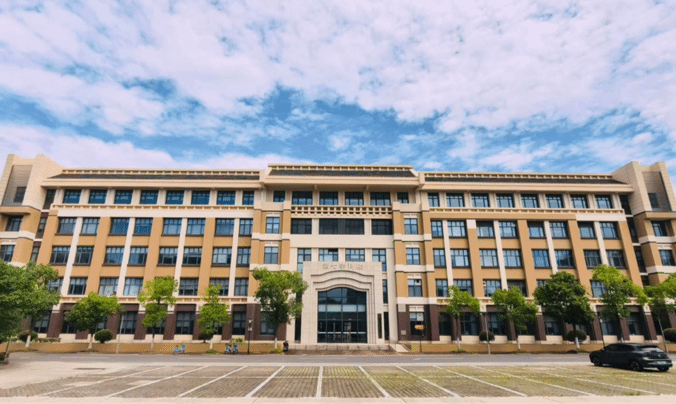
It boasts a complete layout of disciplines and majors with a sound hierarchical system. The Faculty offers 8 undergraduate programs: Safety Engineering, Energy & Environmental Systems Engineering, Civil Engineering, Architecture, Ecology, Landscape Architecture, Horticulture, and Engineering Management. Among them, Civil Engineering is a national first-class undergraduate program construction site; four programs including Safety Engineering, Landscape Architecture, Horticulture and Engineering Management are Shanghai municipal first-class undergraduate program construction sites. The Faculty holds the first-level master’s degree program in Ecology, as well as four professional master’s authorization programs: Resources and Environment (Safety Engineering), Landscape Architecture, Civil Engineering and Water Conservancy, and Agriculture. Relying on the university’s first-level doctoral program in Chemical Engineering and Technology, it undertakes doctoral training, forming a full-chain talent cultivation system covering bachelor’s, master’s and doctoral degrees.
The faculty team boasts a rational structure and strong innovative vitality. It currently has 165 faculty members, including 22 professors and 58 associate professors. More than 90 supervisors for master and doctoral students and over 50 industrial enterprise supervisors are on staff. Over 85% of full-time teachers hold doctoral degrees, and more than 86% are dual-qualified teachers with both academic and industrial expertise. The Faculty adopts a dual-mentor collaborative education mechanism combining on-campus academic supervisors and industrial supervisors, building a high-level teaching and research team deeply integrated with industry, which lays a solid talent foundation for talent training, discipline development and scientific research breakthroughs.
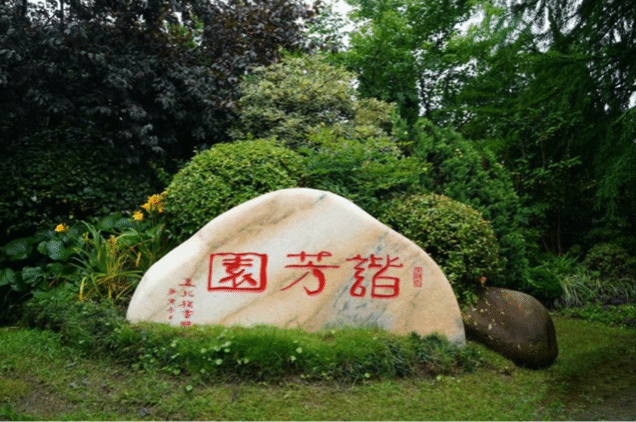
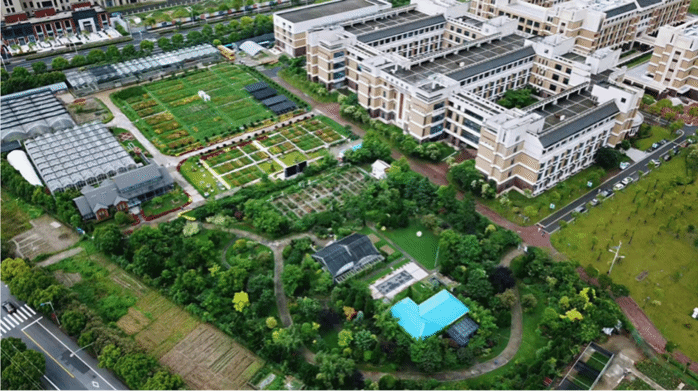
Well-equipped teaching and research facilities provide solid support for school operation. The Faculty owns over 11,000 square meters of professional laboratories and modern greenhouses, equipped with high-end teaching and research equipment such as the 10,000 KN multi-functional test system. It runs two Shanghai municipal experimental teaching demonstration centers: the Comprehensive Experimental Center for Architecture & Civil Engineering and the Comprehensive Experimental Center for Landscape Plants & Application, alongside multiple training bases for dual-qualified teachers. The on-campus botanical garden, named "Xiefang Garden" by academician Meng Zhaozhen of the Chinese Academy of Engineering, is certified as a Shanghai municipal demonstration site for the Citizen Self-Cultivation Program. Serving as a premium education carrier, it integrates teaching training, scientific research practice and popular science education. Based on abundant school-running resources, the Faculty has pioneered a distinctive education model of "Four Duals, Four Reforms and Four Constructions" to accurately meet talent demands driven by industrial upgrading and social development.
It boasts multi-tiered scientific research platforms and strong capacity for social services. It hosts national, provincial and ministerial-level research platforms and think tanks including the National Hemerocallis Germplasm Resource Bank, the Beautiful China & Ecological Civilization Research Institute (a Shanghai university think tank), the Shanghai Key Laboratory of Process Safety & Intelligent Control under the Shanghai Emergency Management Bureau, the Shanghai Urban Road Ecological Engineering Technology Research Center, and the Shanghai Hemerocallis L. Germplasm Resource Nursery. Approved by the Shanghai Municipal Health Commission, the Faculty has jointly established the Shanghai Technical Guidance Center for Occupational Hazards (Toxicants) Engineering Protection with the Shanghai Institute of Chemical Occupational Disease Prevention and Treatment. It also co-founded the nation’s first university-based Safety & Emergency Industry Research Institute with the China Occupational Safety and Health Association. The Faculty serves as the host institution for professional committees under industrial societies including the Landscape Plants Committee of the Chinese Society of Landscape Architecture and the Landscape & Horticulture Committee of the Shanghai Society of Botany. It is also a council member unit of the National Biochar Science and Technology Innovation Alliance and the National Innovation Alliance for Landscape Plants & Human Settlement Environment Construction.
Abundant scientific research outputs deliver robust decision-making support. In recent years, faculty members have presided over more than 100 national, provincial and ministerial research projects including key national R&D programs and National Natural Science Foundation projects. Over 30 new flower varieties have been cultivated, and more than 20 new Hemerocallis L. varieties have obtained international registration. Faculty have won over 30 provincial, ministerial and industrial scientific and technological progress awards. More than 20 think tank reports have received positive instructions from provincial and ministerial-level leaders and above, offering vital decision-making support for ecological civilization construction and the improvement of urban safety resilience.
Committed to open school-running, the Faculty has built a multi-level and all-round collaborative cooperation framework at home and abroad. Internationally, it carries out joint training programs with prestigious universities in the UK, the US and other countries, providing students with high-quality platforms for overseas further study and academic exchanges. Domestically, it maintains long-term stable strategic partnerships with top universities and research institutions such as Shanghai Jiao Tong University, Tongji University, the Chinese Academy of Sciences, the Chinese Academy of Agricultural Sciences, the Chinese Research Academy of Environmental Sciences and the China Academy of Safety Science and Technology. In-depth collaborations cover joint talent training, tackling major scientific research projects, and co-building and sharing high-quality resources, continuously boosting the Faculty’s core competitiveness and industrial influence.
Looking ahead, adhering to the philosophy of ecological civilization construction, rooted in Shanghai and radiating across the country, the Faculty upholds its school-running orientation of "application-oriented and technology-innovative" and the university spirit of "upholding morality, mastering skills, forging ahead and integrating knowledge with practice". It focuses on two core development directions: "urban lifeline & ecosystem security" and "industrial safety & smart emergency response". Centering on cutting-edge disciplines including sustainable urban safety renewal, eco-low-carbon energy, and smart landscape & horticulture, it caters to the green ecological development and high-quality livelihood needs of metropolitan areas. Sticking to the fundamental task of fostering virtue through education, the Faculty comprehensively cultivates all-round high-quality innovative applied talents with sound moral, intellectual, physical, aesthetic and labor education. It provides solid talent and technological support for advancing the green and safe development of Shanghai and the Yangtze River Economic Belt, national ecological civilization construction, and the development of a people-centered city featuring innovation, livability, beauty, resilience, civility and intelligence.
学校地址:上海市奉贤区海泉路100号第七学科楼 邮编:201418 电话:021-60873128
版权所有©上海应用技术大学  沪公网安备31012002003754号 沪ICP备09000134号-1